List of Screening Things Done When Baby Is Born
Nearly all babies will have a simple blood examination to bank check for disorders that are non credible immediately after delivery. Some of these disorders are genetic, metabolic, blood, or hormone-related. Each state in the United States requires screening tests, but the specific tests performed vary among us. Some disorders are more common in some states, making these individual tests more of import in those states.
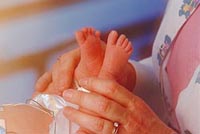
A heel-prick is used to sample the babe's claret. The blood drops are collected in a pocket-sized vial or on a special newspaper. The claret is then sent for testing. The babe'south heel may have some redness at the pricked site, and some babies may have bruising, just this usually disappears in a few days.
Newborn screening tests may include:
-
Phenylketonuria (PKU). PKU is an inherited disease in which the body cannot metabolize a poly peptide called phenylalanine. It is estimated that one infant in 25,000 is born with PKU in the U.South. Without treatment, PKU can cause intellectual disability. Newborn screening for PKU is required in all 50 states.
-
Congenital hypothyroidism. This is a condition in which the baby is born with as well little thyroid hormone. Hypothyroidism is also quite common and has most doubled in the past twenty years to approximately 1 in ii,000 births in the U.S. Untreated low thyroid hormone levels tin pb to mental developmental bug and poor growth. All 50 states screen for hypothyroidism.
-
Galactosemia. This is an inherited disorder in which the baby is unable to metabolize galactose, a milk saccharide. It is estimated to occur in about i infant in every 53,000 births. Without treatment (abstention of milk), galactosemia can be life threatening. Symptoms may begin in the first 2 weeks of life. All states screen for galactosemia.
-
Sickle cell affliction. This inherited disorder occurs primarily in African Americans, only may too occur in Hispanics and Native Americans. The disease causes a severe course of anemia. At that place are different types of the illness. The illness occurs in nigh one out of every 500 African American births and 1 out of every 36,000 Hispanic American births. Early diagnosis of sickle prison cell disease can aid lower some of the risks which include severe infections, blood clots, and stroke.
-
Maple syrup urine disease. This is an inherited disorder that is very common in the Mennonite population. The disorder is caused by an inability of the body to properly process certain parts of protein called amino acids. The name comes from the feature smell of maple syrup in the baby's urine caused by the abnormal protein metabolism. If untreated, it is life threatening as early on as the first two weeks of life. Even with treatment, astringent inability and paralysis can occur.
-
Homocystinuria. This inherited disorder affects 1 in 100,000 babies and causes intellectual disability, bone disease, and claret clots. Information technology is caused by a deficiency of an enzyme necessary to digest an amino acid called methionine.
-
Biotinidase deficiency. This inherited disorder is characterized past a deficiency of the biotinidase enzyme. This enzyme is important in metabolizing biotin, a B vitamin. It affects 1 in 60,000 to 75,000 babies in the U.Southward. and is virtually common in the people of European descent. Lack of the enzyme can lead to severe acid build upwardly in the blood, organs, and torso systems.
-
Congenital adrenal hyperplasia. Well-nigh states screen for this inherited disease of the adrenal glands. Babies built-in with congenital adrenal hyperplasia (CAH) cannot brand enough of the hormone cortisol, which helps control free energy, sugar levels, claret pressure, and how the torso responds to the stress of injury or illness. The Endocrine Social club estimates the incidence of CAH at 1 in most fifteen,000, depending on the severity of the disease. It is extremely mutual in a certain group of Eskimos in western Alaska. CAH may also bear upon the development of the genitals and the hormones of puberty.
-
Medium chain acyl-CoA dehydrogenase deficiency (MCAD). This disorder of fatty acid oxidation can cause sudden death in infancy and serious disabilities in survivors, such equally intellectual inability. MCAD affects about ane baby in six,400 to 46,000, virtually exclusively in people of northwestern European descent.
-
Hearing loss. Three in every 1,000 newborns take meaning hearing loss, and nearly all states are currently testing newborns.
Other tests screen for disorders including congenital toxoplasmosis and cystic fibrosis. Some states are using a new testing technique called tandem mass spectrometry (MS/MS) which tin detect more than 30 disorders using a unproblematic claret sample, including those involving protein and fat acid metabolism.
Most screenings cannot be performed until a baby has received at least 24 hours of breast milk or formula. Your baby may need follow-upward testing if you lot are discharged earlier this time or the baby is unable to be tested earlier discharge. Nearly states mandate a 2d blood test to exist washed at 2 weeks of age.
Source: https://www.chop.edu/conditions-diseases/newborn-screening-tests

Post a Comment for "List of Screening Things Done When Baby Is Born"